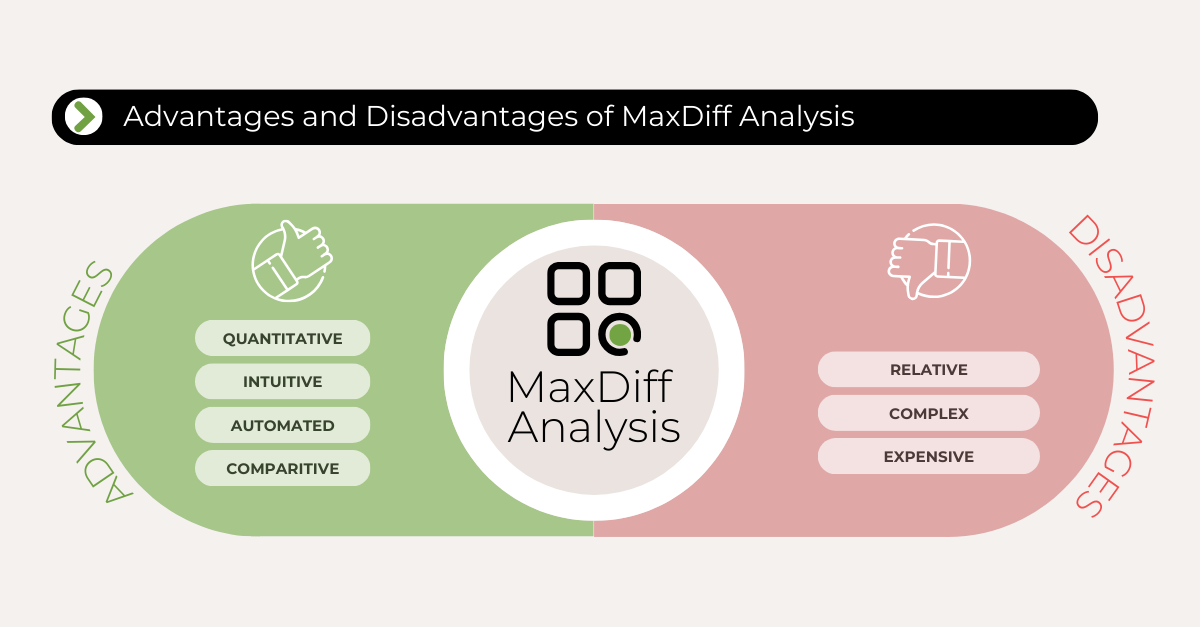
Unlike traditional rating scales, where respondents might rate several items as equally important, MaxDiff forces respondents to make trade-offs, providing a clearer hierarchy of preferences.
MaxDiff surveys typically involve multiple rounds, where respondents are asked to choose the most and least important attributes from a set of options. This process produces a ranked list of features based on their relative importance to the target audience.
For example, an apparel company might use MaxDiff to determine whether fabric quality, sustainability, or price is more important to consumers. The data gathered allows the company to focus on the attributes driving the most value.