x

Reporting & Analytics

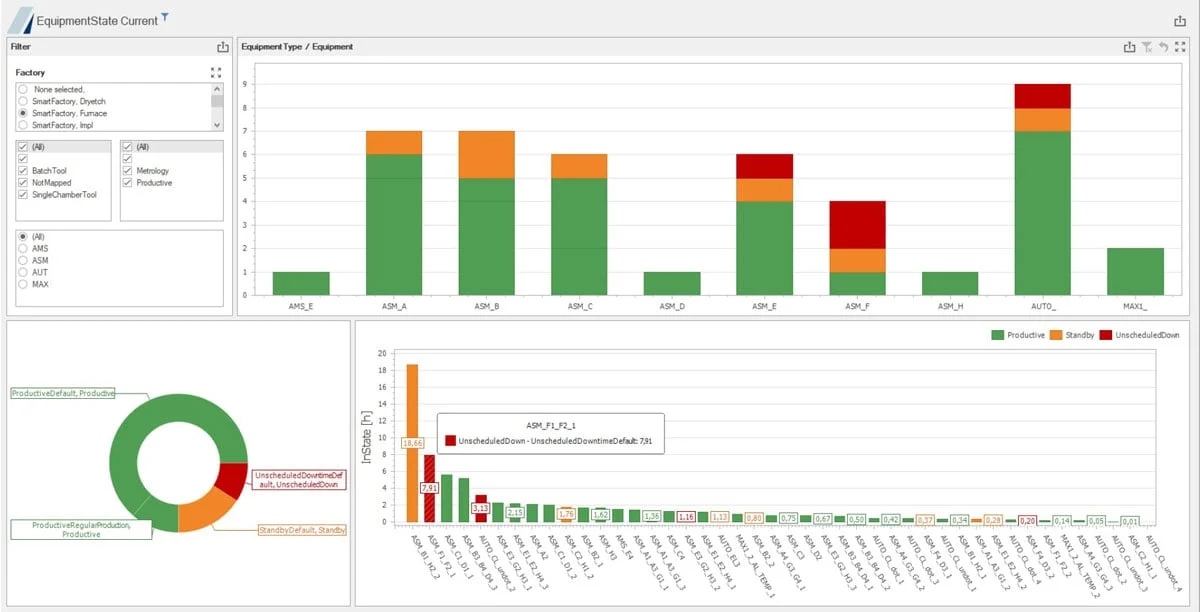
Presently, state-of-the-art reporting and analytics solutions deliver reports and information based on complicated data extraction, transformation and aggregation processes. More rudimentary reporting involves manual data collection, aggregation, and subsequent analysis. Neither method offers inherent real-time capability because the information is collected and delivered after the time has passed when a change could have been implemented to affect the end result.

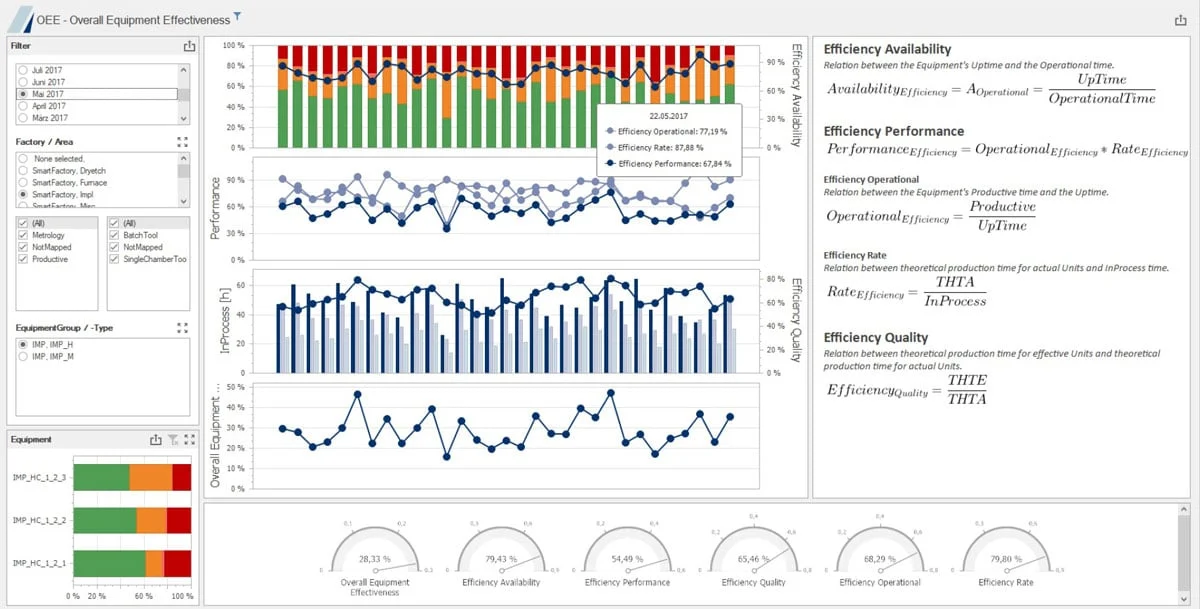
The ability to view information about overall equipment efficiency (OEE), cycle times, flow factor, statistical process control metrics, and other key metrics in real time enables:

Standard reporting and analytics solutions are commonly provided in conjunction with historical data available through an existing manufacturing execution system. If the needs of your manufacturing environment demand more advanced capabilities, it may be possible to extend the reporting features of your existing system or enable R&S Analytics’s Holistic Information Model (HIM) for real-time data and complex analytics capabilities to quickly detect problems, inform the development of solutions, and verify the solution actually solved the problem. 

Enabling Reporting Capabilities

As with all other digital transformation strategies, the achievement of high-quality reporting and analytics capabilities is dependent upon well-integrated technology layers, including:

The Future of Reporting & Analytics

Current research and development efforts center around leveraging large amounts of real-time data in conjunction with deep learning methodologies to enable technology capable of things like dynamic production forecasting, predictive maintenance, and causality analysis. Current research: